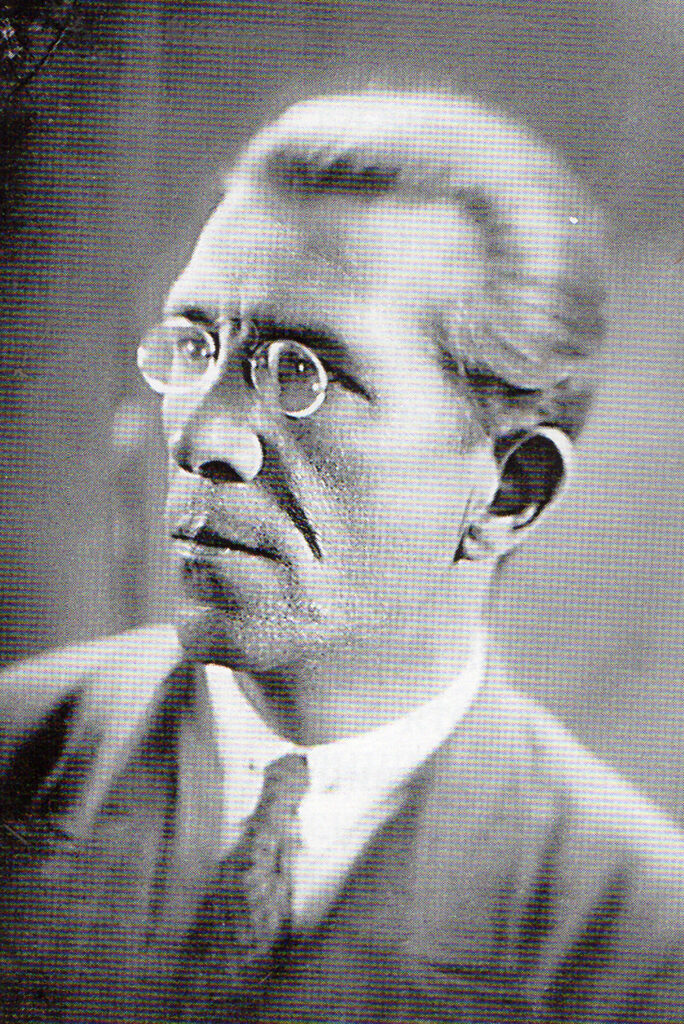
Petro Smolichev (1891–1944) well known to all, who is interested in the archeology and history of our region. Petro Ivanovych began his work as a museum curator in the spring 1923 Dr.. in the position of head of the 2nd Soviet Museum (former museum of the Chernihiv Provincial Scientific Archival Commission). At that time, there were five museums operating in the city. In the fall of the same year, they were merged into the Chernihiv State Museum. П.І. Smolichev was appointed head of the historical and archaeological department and headed it until August 1931 year.
In addition to museum work on the creation of a new exposition, systematization and cataloging of funds, excursion activities, the scientist was actively engaged in scientific research. Влітку 1923 year under the leadership of representatives of the Ukrainian Academy of Sciences (All-Ukrainian Academy of Sciences) professors M.O. Makarenko and I.V. Morgilevsky participated in the architectural and archaeological research of the Spassky Cathedral; in 1924 та 1926 years together with professor I.V. Morgilevsky - in the survey of the Assumption Cathedral of the Yelets Monastery.
На початку 1924 Dr.. commission, which included representatives of Chernihiv Region. Flight of Enlightenment, Sednievskiy Executive Committee and Komnezam, religious community of the Resurrection Church, лікар, chemist, and other, The tomb of the Lyzogub family in the Resurrection Church in Sednev was examined. Petro Ivanovych, as a representative of the museum, he was a member of this Commission, described mummified burials of the 18th and early 19th centuries., about which there are detailed entries in his diary.
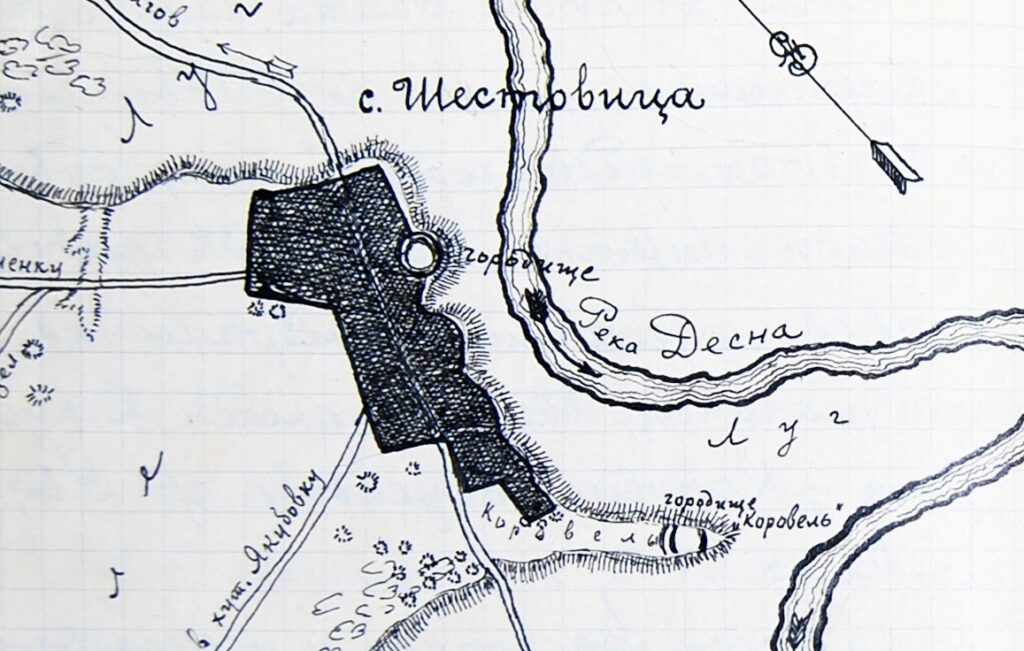
But first of all, the name of Pyotr Ivanovich Smolichev is associated with the research of the world-famous Shestovytsky complex of archaeological monuments. On 1925 by 1927 years, an expedition of the Chernihiv State Museum under his leadership explored the ancient Russian burial mound. Surveys and "trial" excavations of the hillfort in the Korovel tract were carried out, the first plan of sights near the village was drawn up. Шестовиця.
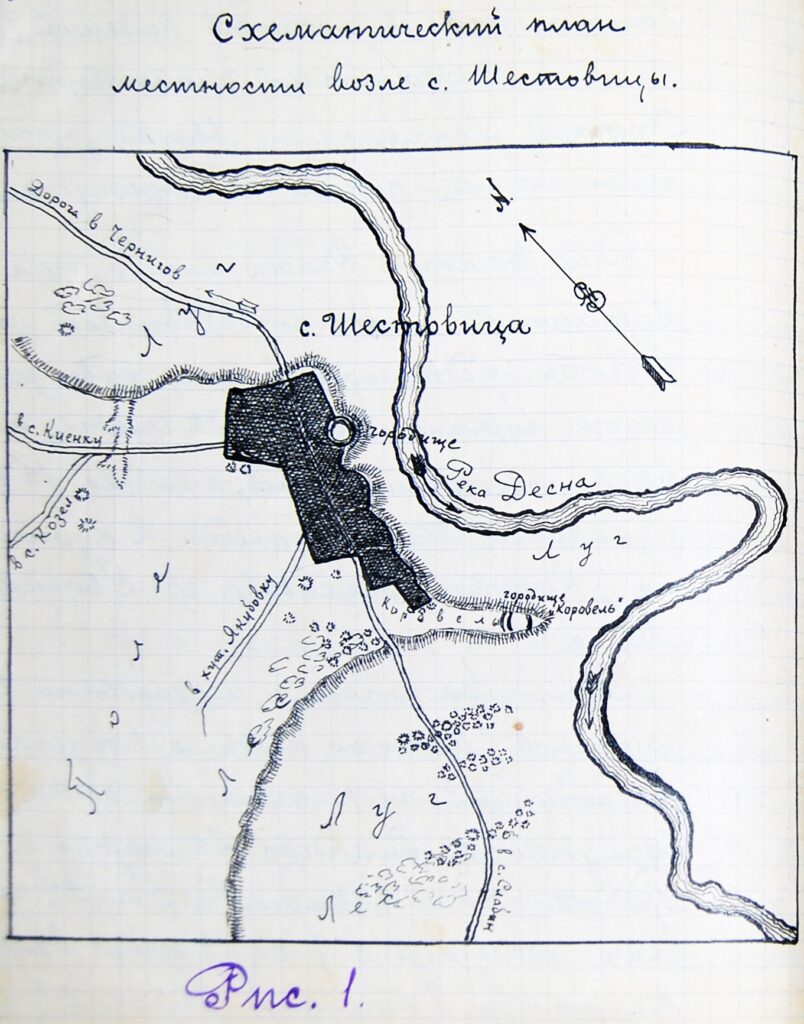
Plan of sights near the village. Шестовиця (a page from the diary of P.I. Smolicheva)
Already the first year of research brought extremely interesting results. Two barrows (No. II and X) contained paired burials with a horse in chamber tombs with numerous and rich inventory. One of the richest - barrow No. X - P.I. Smolichev considered in the article "Double burials of the 10th century near Shestovytsia in Chernihiv Oblast". Under the height of the mound 1,1 m and diameter 13,4 m researched paired burial in the chamber. The man was buried in the center in a sitting position, the woman was lying on her back to his left. At their feet was a horse with bent legs. A sword is placed in the heads of the buried, nearby - two stirrups and two bone ornamented pads on the saddle bow; spear points lay next to the man, bone overlays on the bow, fragments of a quiver sheath and an arrowhead, will 2 stirrups, vudil, knives, bone comb and nail. Збереглися 43 гудзики, overlays on a belt, belt tips and shoulder bag patches, remnants of woolen and silk fabrics. According to some scientists, the inventory of this burial was spent from 900 to 1500 g of silver, i.e. about 300-500 dirhams.
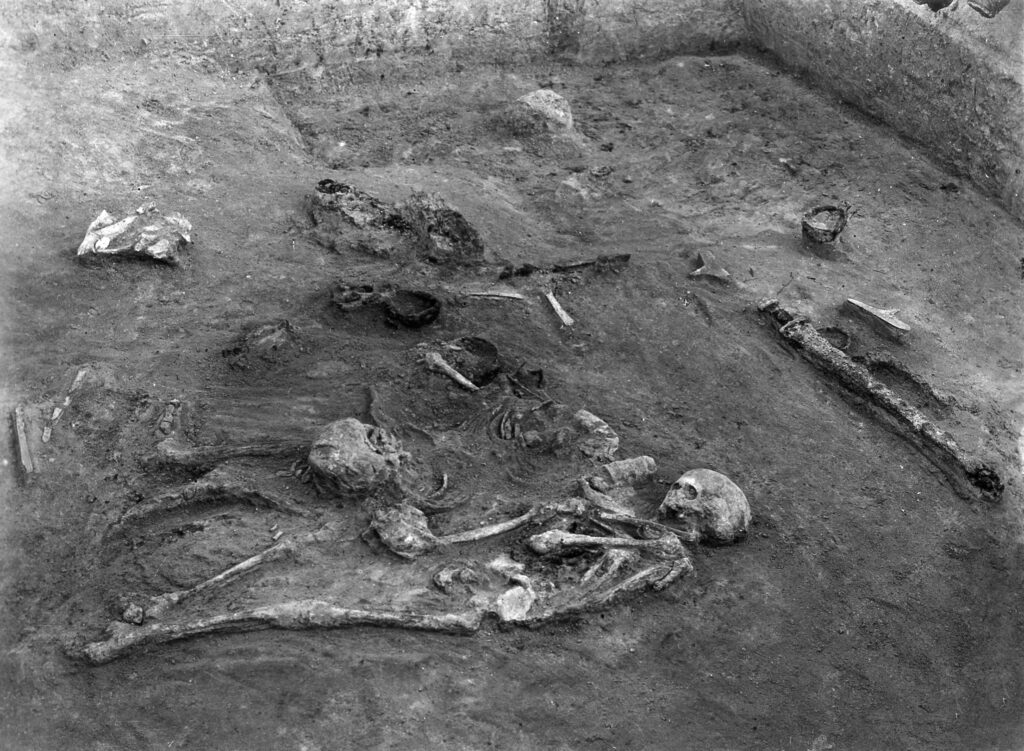
Kurgan No. X (42), 1925 Dr..
During three field seasons were studied 42 embankments in different mound groups. Numerous and interesting finds, obtained during excavations, about 1500 items, arrived at the museum. Do 1928 Dr.. Swedish archaeologist Ture Arne visited Chernihiv and saw these materials in the museum exhibition, and only 1931 His article was published in 2010, which examines burials in Shestovytsi cells, things from them and a close connection with Scandinavian burials in wooden chambers can be traced.
Weapon, horse equipment, costume details, прикраси, household items, etc. - almost 500 items - and are currently stored in the Chernihiv Historical Museum named after V.V. Tarnovsky.
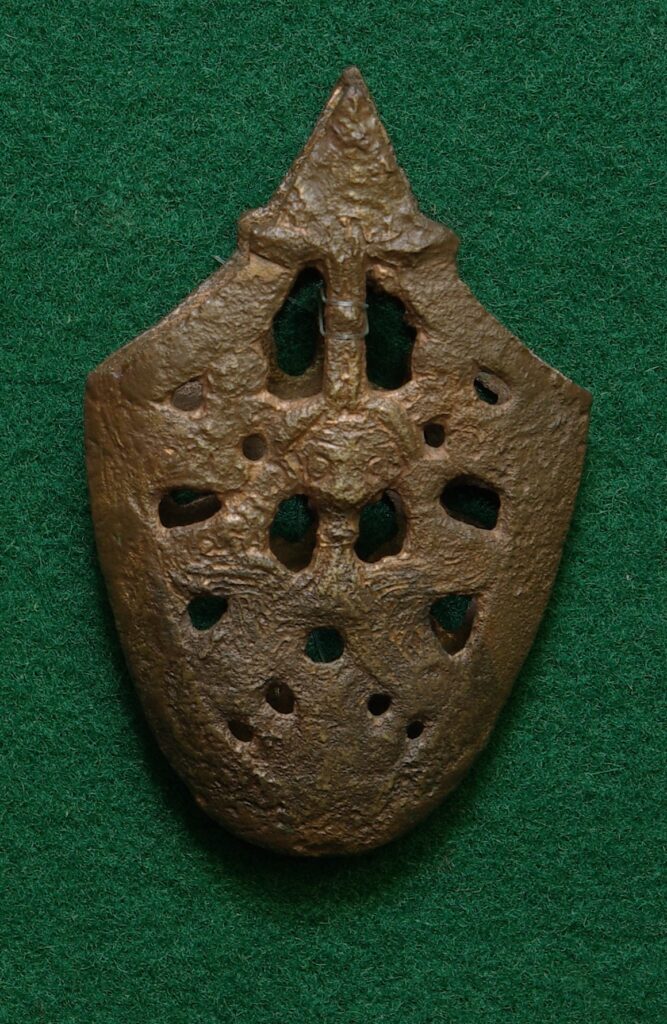
Buterol, mound No. X (42)
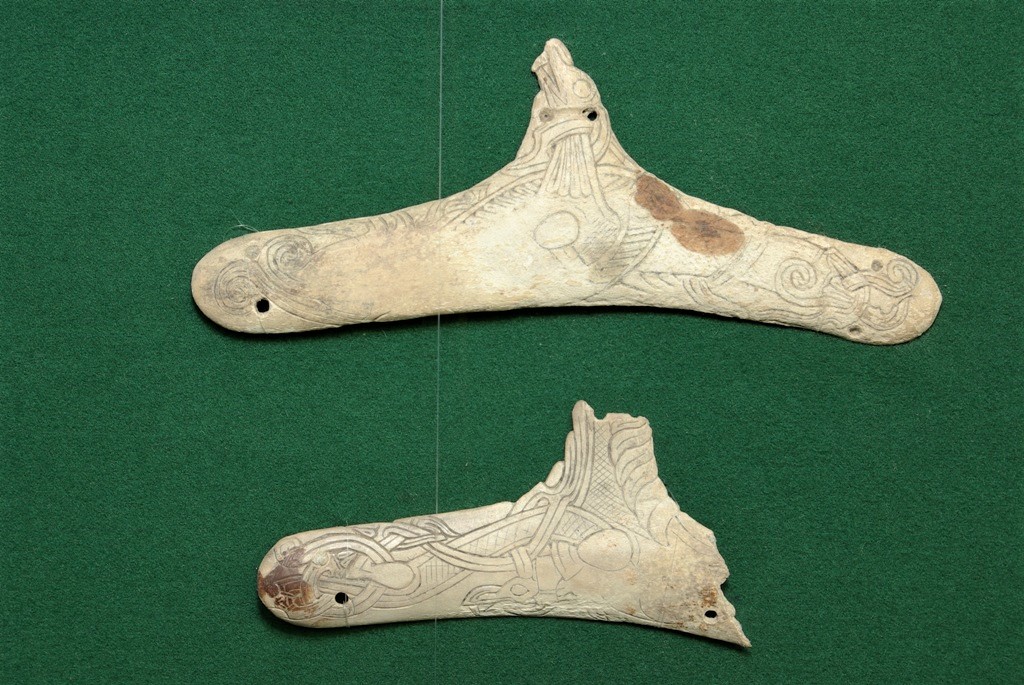
Pads on the saddle bow, mound No. X (42)
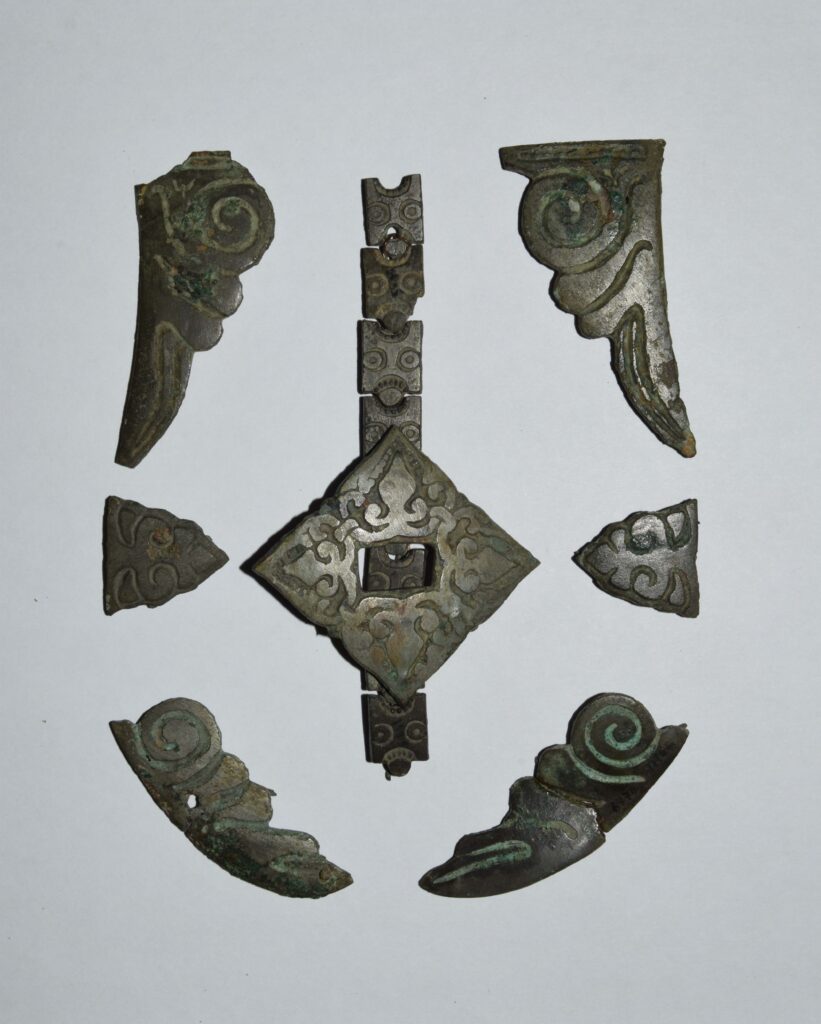
Overlays for handbags, mound No. X (42)
Petro Ivanovych devoted several articles to the antiquities of Shestovytsia, prepared a complete edition of the excavation materials, however, he did not have to complete this work. Влітку 1931 Dr.. П.І. Smolichev finally moved with his family to Zaporizhzhia, where he was appointed to the position of the head of the Sector of sequential change of cultures of the State Museum of Dniprobud. He transferred his powers at the Chernihiv State Museum to S.H. Baran-Butovicu.
Little is known about the further fate of Pyotr Ivanovich. The scientist survived the political repressions of the 1930s, that raged in Ukraine, far from the Motherland. He spent the last years of his life in Tajikistan, continued to do his favorite business. Died 1944 rock in Dushanbe.
П.І. Smolichev is the author of publications on archaeological research in Chernihiv Oblast, Cherkasy, on the territory of the construction of the Dnipro HPP and in Tajikistan. On 1925 Petro Ivanovych is a valid member of the Ukrainian Armed Forces (All-Ukrainian Archaeological Committee).
The research of the Shestovytsky complex, started by Pyotr Ivanovich Smolichev, continued with small interruptions from the middle of the 20th century until 2019 year. Objects from the collection of the Chernihiv Historical Museum named after V.V.. Tarnovskyi were recently exhibited at the exhibitions "Rus - Vikings in the East" (Moesgaard Museum, Aarhus, Denmark, 2022- 2023 years) and "Sweden - Ukraine: crossroads of history (a thousand years)» (Museum of the Swedish Army, Стокгольм, Sweden, 2024- 2025 years).
Senior Researcher Ludmila Sita
More Stories
To the day of memory of Taras Shevchenko
Exhibition for the 130th anniversary of the Museum
Irmologion of Peter Mohyla