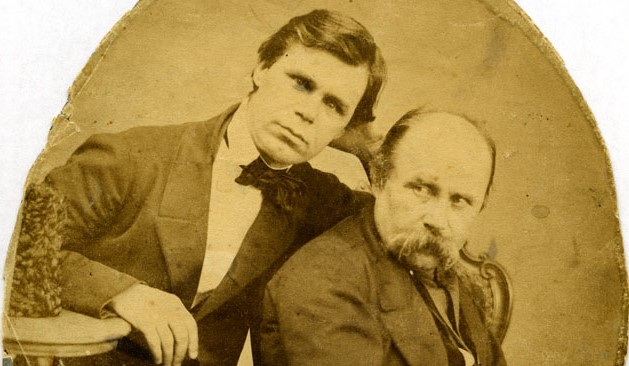
In winter 1861 year, a serious illness prevented Taras Shevchenko from breathing freely, heavy thoughts tormented the soul. 15 sad lines fell on the paper in February:
"They won't leave us, heaven,
My neighbor, wretched.
Poems are worthless verses,
But the scaffolding begins
Take you on a long journey,
To that world, my friend, to God."
It was the last poem of the poet , and eleven days later he was gone.
The tragic news quickly spread through the Academy of Arts, and later St. Petersburg. The next day, the terrible news reached different cities of Ukraine by telegraph, including in Chernihiv and Nizhyn.
28 February, a huge number of people gathered at the Smolensk cemetery to pay tribute to Veliky Kobzar. Most of the farewell words were in Ukrainian. The invaluable importance of a poet-fighter, the thinker was noted by all the speakers. "That's why your glory is eternal and your treasure is the most precious: nothing and no one will take this away from you", - noted the Ukrainian public and political figure, journalist Vasyl Bilozerskyi. The famous historian Mykola Kostomarov mentioned, that the funeral of Taras Shevchenko showed national sympathy and respect for the talent of the Ukrainian poet.
At the end of April 1861 thanks to the petitions of representatives of the Ukrainian community, it was possible to obtain official permission to transport the ashes of Taras Hryhorovych for burial in Ukraine.
26 In April, the house dug out of the ground was covered with red china, sent by rail to Moscow. Then the mourning procession followed the postal route, which ran through populated areas of Chernihiv province: Esman – Glukhiv – Tulogolove–Krolevets–Altynivka–Kycha–Baturin–Doch–Borzna–Olenivka–Komarivka–Nizhyn–Volodkova–Divitsa – Nosivka – Kozelets – Brovary – Mykilska Slobidka.
8 In May, Shevchenko's ashes were transported from Kyiv to Kanev by the Kremenchug steamer, and 10 May, after a crowded memorial service in the Dormition Church, the poet was buried as he had dreamed, on Chernechaya Gora, where,
"...and Dnipro, and steep
It was evident, was heard,
How the Roaring Roar".
Thousands of fellow Ukrainians accompanied the poet on his last journey. Their thoughts and feelings were expressed over the coffin by a Ukrainian public figure, later the first biographer of Shevchenko, Mykola Chaly: "Our grief is too great, to put it into words, and too deep, to deepen it with sad appeals… The glory of this name will not die among posterity. It will live in the people for a long, long time and will disappear except with the last sound of the Little Russian song, and the folk song does not die …”
A friend of the poet showed considerable initiative and perseverance in fulfilling Taras Shevchenko's spiritual will, young artist Hryhoriy Cestakhivskyi. He accompanied the coffin from St. Petersburg to Ukraine for burial, during the mourning journey, he made sketches of the poet's meetings and farewells, shared memories of the last years of Taras Hryhorovych's life, read his works. Deep respect for Shevchenko's multifaceted talent united Hryhoriy Mykolayovych with the famous Ukrainian collector and philanthropist Vasyl Tarnovsky, to whom the artist informed about his intention to transfer personal belongings, left after the death of Taras Hryhorovych: “Darling dear, a sincere Cossack soul, Vasyl Vasyliovych! How God will please our dear, sweet Cossack Nenetsa-Ukraine dezhdat of that time, that it will build a national repository (Museum), then try all the grain of Taras Hryhorovych Shevchenko - etchings, box with tools for etchings, box of paints, brushes for painting, horn spatula, two steel spatulas, easel, mushtabel, inkwell, with pens, pencils, the first mask, taken from Shevchenko by Baron Pyotr Karlovych Claude, and a crystal embossed bottle cap, from which Taras Hryhorovych used to drink vodkay" — all that, that I kept at home after the death of Taras Grigorievich Shevchenko as a holy memory, - now I will pass it on to you, dear Cossack, - give it to that repository for the eternal memory of Taras the Kobzar". Thus Shevchenkian Tarnovsky, which had a special place in his collection, was filled with valuable exhibits.
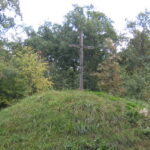
In the last years of his life, Hryhoriy Cestakhivsky often visited the beautiful estate of V. V. Tarnovsky in Kachanivtsi, he was buried there 1893 year. A high mound was built over the grave in the park in memory of Taras Shevchenko, an ardent admirer.
Head of the scientific and educational department of the museum Natalia Samokhina
More Stories
Exhibition for the 130th anniversary of the Museum
Irmologion of Peter Mohyla
On the waves of memory