16 October 2024 of the Chernihiv regional historical museum named after. VV. Museum meeting "Brick architecture of the Chernigov-Siver region of the 11th-13th centuries" was held in Tarnovsky. as part of events for the 1000th anniversary of the Chernihiv principality.
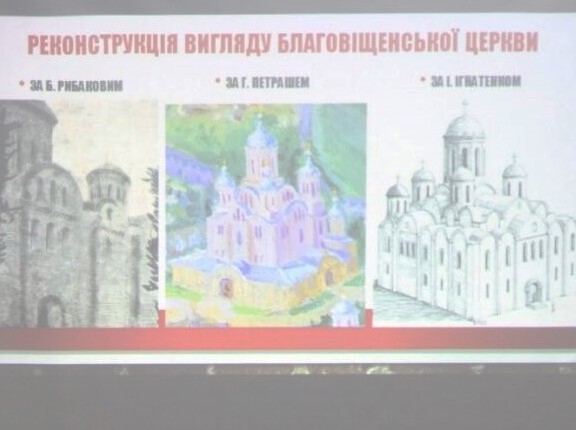
The famous Chernihiv archaeologist Ihor Ignatenko told the audience about the building traditions of the period of Kyivan Rus, about sights, that will remain in Chernihiv Oblast, shared his well-founded assumptions about the dating of the buildings and the stages of their construction.
The traditions of brick construction on the territory of the ancient Ukrainian state were formed primarily under the influence of the masters of the Byzantine Empire.
Emphasizing the main attention on the peculiarities of the architecture of the Chernihiv-Siver region, the speaker noted, that "brick architecture is a symbol of the greatness of the principality".
The researcher talked about the construction and reconstruction of temples, that remained on the territory of Chernihiv, Новгород-Сіверського, Sharp. So, in his opinion, the construction of the Borysoglib Cathedral in Chernihiv dates back to the 20s of the 12th century., but the structure was relatively small. Probably after an earthquake, restoration of the temple became possible only in 50-60 years of the twelfth century. The cult building was significantly increased in size.



Mr. Ihor Ignatenko repeated his opinion several times, that the Assumption Cathedral of the Chernihiv Yeletsky Monastery was the most perfect in terms of construction technique and skill.
For the XI-XII centuries. the combination of two main styles - Romanesque and Gothic - was characteristic during construction. So, a building of one style had elements of another style in design and decoration.
The construction technique of "Cernihiv" masters was spread far beyond the borders of the modern Chernihiv region.
Ihor Ignatenko's story was illustrated with the author's drawings.
More Stories
To the day of memory of Taras Shevchenko
Exhibition for the 130th anniversary of the Museum
Irmologion of Peter Mohyla