Чернігівський історичний музей імені В. In. Tarnovsky has not only rich fund stores, but it can also boast of rare European old prints and valuable books as part of its fundamental library. Однак, unlike stock, they are largely unexplored and have never been presented to the general public.
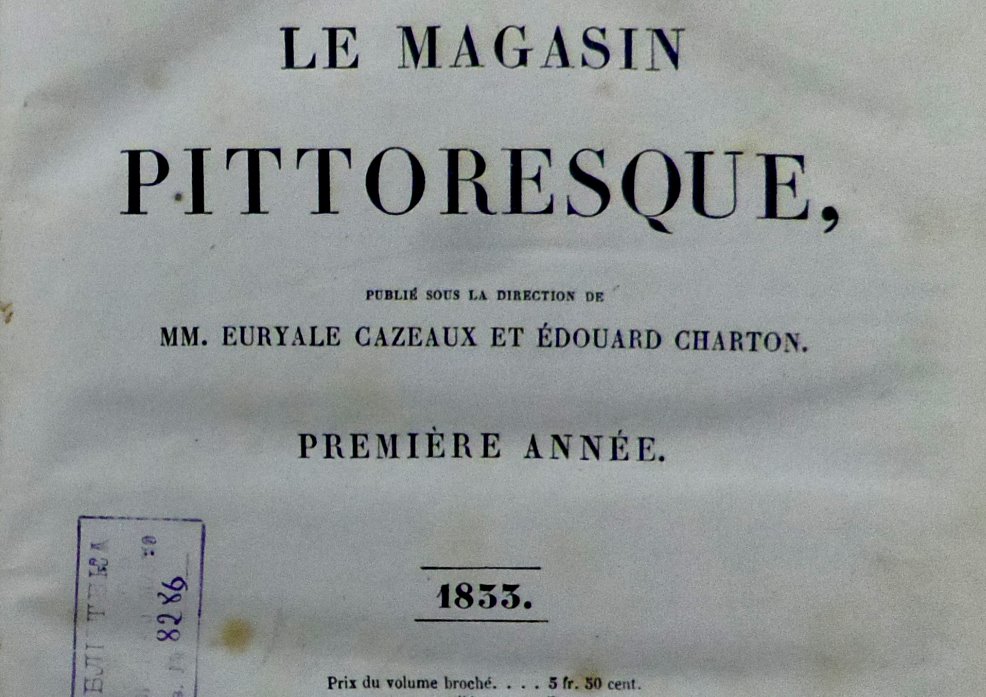
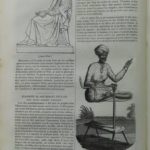
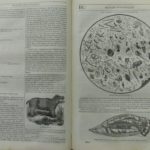
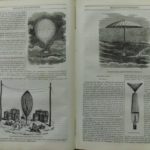
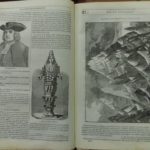
The library collection of the museum mainly presents editions of the XVIII–XIX centuries. in French. There are much fewer book publications in Polish, and the least in English and German. Among the few copies of French or English periodicals in French, found in the museum library, stands out "Le Magasin pittoresque" (Ukrainian. "Picturesque Shop"). It is a French illustrated popular science magazine founded 1833 Dr.. a lawyer by education and a journalist by profession, Edward Charton (1807–1890), which was published in Paris almost without a break during 116 years. He was inspired to take this step by similar illustrated editions printed in Great Britain in the first third of the 19th century., such as the weekly "The Penny Magazine", created to spread scientific knowledge among workers. The French magazine consisted of articles from a wide variety of scientific fields: stories, Numismatics, Ethnology, mechanics, botanists, zoology, astronomy, geography, literature, архітектури, fine arts, etc. The main direction of the publication was humanitarian, rather than the exact and natural sciences.

Five copies of the annual issue of the magazine are stored in the museum library 1833 р., 1834 р., 1836 р., 1842 Dr.. та 1848 Dr..
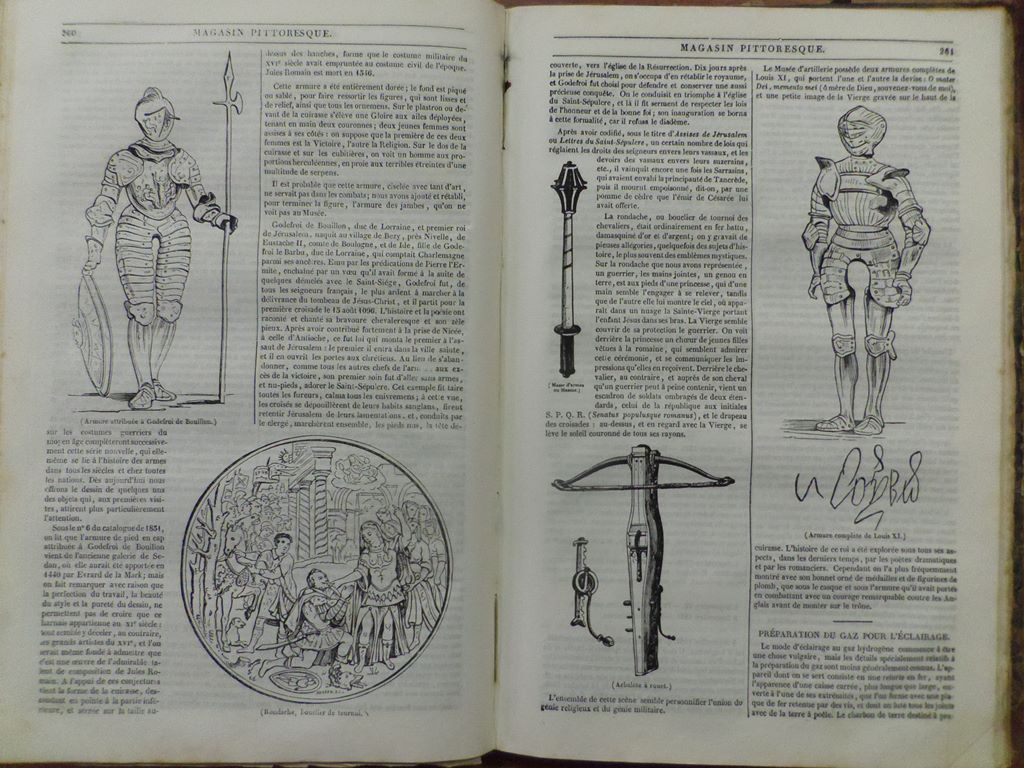
The origin of these magazines is still a mystery, because, apart from the museum seal, there are no other library and ownership marks. Magazines look quite unusual for a modern viewer, but quite solid and refined. Their thick cardboard binding is covered with paper with a pattern stylized as green, dark gray or brown-yellow "marble" of various shades with veins and a leather base with ornamented embossing, gilding. All books are the same size (197 х 292 mm.), mostly the same number of pages and issues of retail issues, which count equally 52 per year. There is no clear division into specific thematic sections in the journal, because it consists of separate issues filed one after the other. Also, the magazine does not have the usual content for us. Instead, there are thematic and alphabetical indexes at the end of the volume. At the same time, the thematic content varies and is heterogeneous. There may be more than one story or related topic in one issue, and the rest is dominated by travel materials, plants and animals. Also, new articles on the subject may appear in different volumes, which others do not have. Наприклад, in the first volume for 1833 Dr.. there are articles devoted to armor, and already in the volume 1834 Dr.. articles about languages appear, Scripture, etymology of words, mechanics, various sciences. They will continue to be available in the magazine in one form or another, apart from scripture and anecdotes, which appear among the rubric only in 1842 Dr.. Mandatory rubric, which is present in all volumes is the rubric "Week. Historical calendar", which presents important historical dates and events for the French.
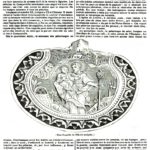
History of art, архітектури, culture was an important part of the materials published in the magazine. Among such publications there are articles about the famous cathedral of Notre Dame de Paris, the world-famous Taj Mahal, the history of costume in France, miniatures from manuscripts of the 14th century., Eastern mythology (about jinns), religion (Buddhism, Islam, Hinduism, Sikhism) and history, biographies of prominent people (Thutmose III, Plato, Confucius, Isaac Newton, Leonardo da Vinci).
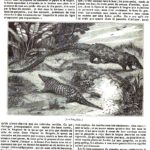
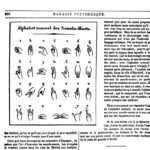
Articles about various exotic animals are also interesting, insects (lama, cheetah, the ocellus, panther, kiwi fruit, Surinamese lamprey or "crocodile butterfly", sphinx skull butterfly) and plants (rafflesia arnold, breadfruit tree, palm tree, camphor laurel, New Zealand flax or phormium is strong), there are even about microscopy and microscopic creatures. The magazine drew attention to a variety of important humanist literature, which at that time was almost forgotten. Наприклад, to the famous "Utopia" by T. You have to (1478–1535) and "The Canterbury Tales" by J. Chaucer (бл. 1344–1400). In addition, in the magazine for 1846 Dr.. there are pedagogical materials related to the intellectual development of middle-aged children, actually, for this, the following games are offered, as: "Wax Chessboard", "Pattern", "Fox and Geese", "The game of philosophers". In the first volume of the magazine 1833 Dr.. the training method is presented, sign alphabet for people with hearing and speech disabilities.
The magazine also contains articles on natural and exact sciences (сільське господарство, математика, medicine and hygiene, meteorology, mineralogy, фізика, navigation, географія). There are even articles about drinks and food under the heading "Medicine"., guilt, phenomena of albinism, mesmerism or catatonic state, which allowed Indian fakirs to perform tricks with their burial alive and reviving.
Among the articles on mechanics, historical intelligence about inventors and achievements of predecessors dominates. In particular, provides information about ancient mechanics (the work of famous scientists Ctesibius, Archimedes), drawings of clock mechanisms and combination locks, the origin of the steam engine and the machinery of that time in general ("Machines and their advantages. Ingenious processes").
An article entitled "Mechanics. Vaucanson's machines" about the life and inventions of the famous French mechanic of the 18th century. Jacques de Vaucanson (1709–1782), which was famous in its time for the creation of various mechanical toys, contemporaries were especially impressed by humanoid mechanisms. One of his most famous works is a human-sized figure of a flutist presented in Paris in 1738 р., springs and bellows were arranged inside it, which supplied air to various parts of the mechanism so, that the lips of the humanoid mechanism and its fingers made the correct movements on the flute, creating a melody.
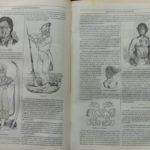
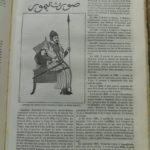
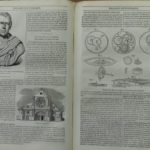

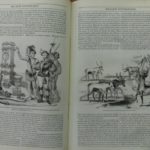
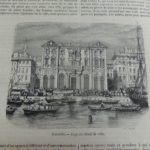

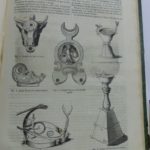
"Picturesque Shop" was a fairly popular Parisian periodical accessible to various strata of society. He became a notable cultural phenomenon in the history of French journalism in the 19th and the first quarter of the 20th centuries., which was of great importance for the spread and popularization of scientific knowledge in France. This is not surprising, because the founder of the publication was a supporter of the enlightenment ideas of one of the fathers of utopian socialism, Claude Henri de Saint-Simon (1760–1825).
Researcher of the museum,
Candidate of Historical Sciences Valentin Rebenok




More Stories
To the day of memory of Taras Shevchenko
Exhibition for the 130th anniversary of the Museum
Irmologion of Peter Mohyla